Home / Learn / Major vs Minor Arcana
Guide 03
Major Arcana vs Minor Arcana
A full tarot deck has two kinds of cards: 22 Major Arcana and 56 Minor Arcana. Each half carries a different kind of meaning, and the difference shapes how you weigh every card in a spread. Here's what separates them, with examples from both halves.
The Major Arcana
The majors are the 22 cards tarot is best known for: the Fool, the Magician, the Lovers, Death, the Tower, the World. Each one carries a number (0 to XXI) and a name, and none belongs to a suit. In a reading they cover the big movements of a life: identity, upheaval, changes of fortune. Death is less grim than its reputation — it usually points to an ending that clears ground. The Tower is sudden collapse. The Wheel of Fortune covers luck and timing.
Read in order from 0 to XXI, the majors also trace one long story, usually called the Fool's journey: a figure steps toward the cliff's edge knowing nothing and arrives at the World twenty-one cards later. That arc is worth studying on its own once you know the deck.
The Minor Arcana
The other 56 cards divide into four suits numbered Ace to Ten, topped by four court cards. Wands are about ambition and drive, Cups about feeling and connection, Swords about thought and conflict. Pentacles get the practical side: work, money, health, home.
Minors describe life at human scale: arguments, paydays, a night without sleep. The Three of Swords is heartbreak, plain and sharp. The Ten of Pentacles shows a household in good order, and the Five of Wands a squabble where everyone talks at once.
What the difference means in a reading
When the Tower turns up in a spread about your job, something structural is moving. When the Ten of Wands turns up in the same position, the message stays at ground level: you've taken on too much, and something needs to be set down. What changes between those two readings is the scale of the answer.
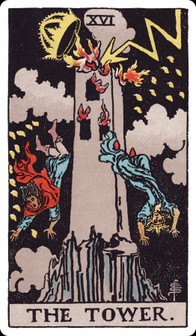
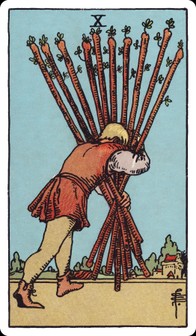
In practice, check which half dominates a spread before you decide how sweeping its answer is. Counting the majors on the table is one of the first moves in reading a spread.
The minors are where the deck's structure lives.
Do majors outrank minors?
No. Several majors in one spread do mean the stakes are high. Even so, in a question about a friendship the Two of Cups can carry the whole reading while a major sits in a corner doing very little.
The court cards
Each suit's Page, Knight, Queen, and King sit inside the Minor Arcana, and they usually stand for people, or for ways of acting: a Page tends to study a situation, a Knight to charge at it, while Queens and Kings manage it from experience. They're still minors, though, and they read at the same everyday scale as the rest of their suit.
How to study the two halves
Take the minors first, one suit at a time, and add the majors once you can read a minor from its suit and number without stopping to think. That order leaves the best-known cards for last, which can feel backwards at first. But the minors are where the deck's structure lives, and knowing that structure makes the majors much easier to place. The full study order — and how long each stage actually takes — is in the how to learn tarot guide; if you're brand new to the deck, start with tarot for beginners.
Can you read with majors only?
You can, and some decks are published as just the 22. If you're learning the whole 78, treat majors-only readings as a change of pace once the deck feels familiar, since the study order above still pays off fastest.
Both halves, one curriculum
Little Grimoire teaches the suits first, card by card across four chapters, then gives the Major Arcana a full chapter of their own, the Fool's journey start to finish. One purchase, no subscription, works offline.
First two lessons free · No subscription · iPhone and Android