The suit of air
The Suit of Swords
Some Swords cards are as grim as anything in the deck. The suit's subject is the mind, though, and a good share of the pain on these cards is happening in someone's head.
A truth arrives at the Ace, and the other nine number cards show what a mind does with it. The Two won't look, and the Three takes the blow anyway. The Four through the Seven try ways of coping: rest, a fight, a boat ride, a clever escape. Only the rest and the boat ride help. At the Eight and Nine, the mind is doing the damage itself, and the pictures bear that out. On the Eight, no sword touches the blindfolded figure, and the Nine's swords are lined up on a dark wall over a bed. The Ten, ten blades in one back, is the suit's worst moment, but even there a yellow strip of morning has opened along the horizon.
Through the first ten cards, swords mostly happen to people. In the court, people pick them up. Each of the four holds a single blade upright or raised, so a court card from this suit points to someone using their head on purpose. Whatever the card, check where its swords are before deciding how bad it is.
The suit · Ace to King 14 cards · ten and four
The numbered cardsA—10
A truth arrives, and the mind does the rest.
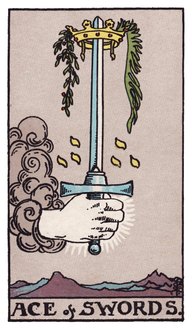 Ace of SwordsClarity you can't unsee
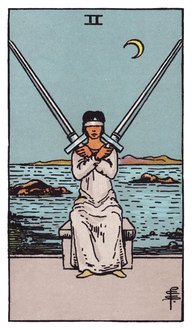 Two of SwordsPeace kept by looking away
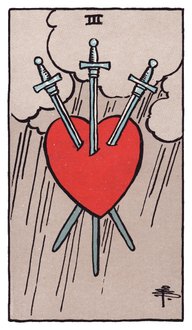 Three of SwordsTruth that lands and hurts
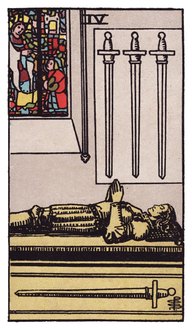 Four of SwordsRest taken on purpose
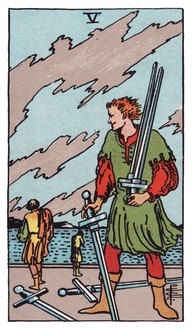 Five of SwordsWinning at too high a cost
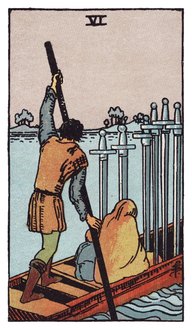 Six of SwordsCarrying the hurt somewhere calmer
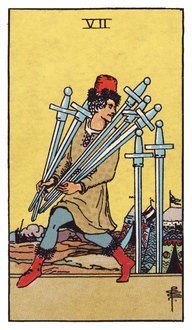 Seven of SwordsCleverness that may be evasion
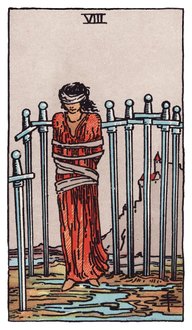 Eight of SwordsTrapped mostly by belief
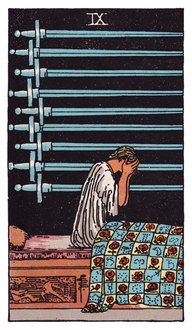 Nine of SwordsWorry that grows at night
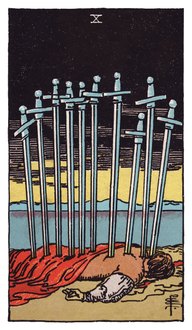 Ten of SwordsRock bottom at first light
The courtPage to King
The sword, held on purpose.
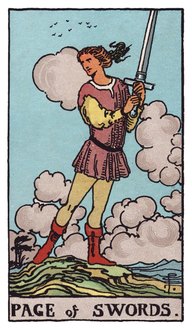 Page of SwordsAsking the question others won't
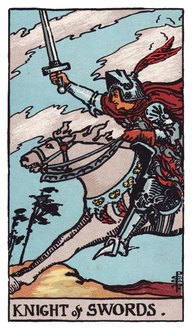 Knight of SwordsCharging ahead on conviction
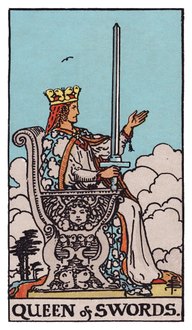 Queen of SwordsHonesty offered as care
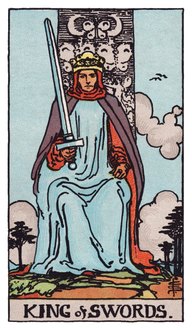 King of SwordsDecisions built on clear thinking

Chapter IV of Little Grimoire walks the whole Suit of Swords, card by card, with practice built in.
A reference page tells you what a card means. Little Grimoire teaches you to work it out from the sequence, the imagery and the position. Then, when you meet an unfamiliar card, you can reason it through instead of looking it up.
Free to start · No account needed to try a lesson