The named cards
The Major Arcana
Twenty-two cards run from zero to twenty-one, and the order is doing more work than most people notice. Read as a sequence they stop being a list to memorise and start being an argument.
The run divides into three movements. The first seven face outward and build a world you can act in: someone who makes, someone who perceives, two thrones, a teacher, a choice, and a victory won by pulling yourself together. Nothing in that stretch asks who you are. It asks what you can do with what's in front of you.
Then the deck turns inward and the tools stop working. Strength answers the Chariot's question by refusing its method. The Hermit withdraws, the Wheel takes control away, Justice removes deniability, and the Hanged Man removes momentum, so that by the time Death arrives you're carrying almost nothing. Temperance closes the act by putting a person back together slowly enough that it holds.
The last seven go somewhere else again. The Devil, the Tower and the Star read as one long event caught at three moments, and the sequence then spends its remaining cards on recovery, which tells you plainly what it thinks the collapse was for. It ends with a dancer inside a closed wreath, and then it hands you back to the Fool.
The three-act shape isn't decoration either. You can feel it in a reading: a spread heavy in the first seven is usually about circumstances and what to do about them, while one that leans on the middle stretch is asking something you can't fix by acting harder. Knowing which act a card came from tells you what kind of question you're actually in.
Learn it this way and the Majors stop being twenty-two things to remember. They're one argument with a shape, and knowing where a card sits will tell you most of what it means before you've memorised a single keyword.
The sequence · Fool to World 22 cards · three acts
Act one0 — VII
A world you can act in
Seven cards that face outward. Nothing in this stretch asks who you are; it asks what you can do with what's in front of you.
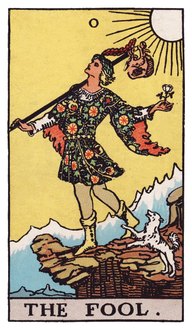 0The FoolGoing before you're ready
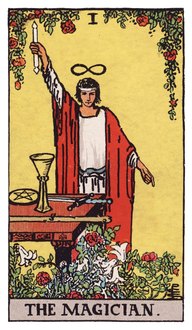 IThe MagicianEverything needed, already on the table
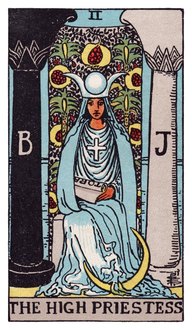 IIThe High PriestessShe knows before she can say
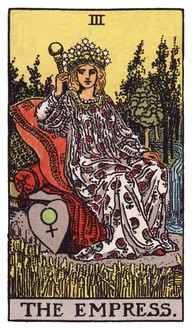 IIIThe EmpressPlenty that doesn't need proving
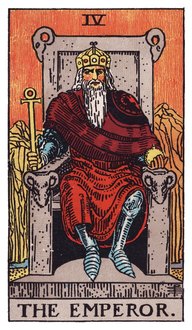 IVThe EmperorSomeone has to hold the frame
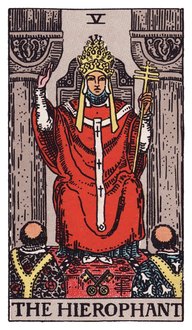 VThe HierophantBorrowed knowledge, and its price
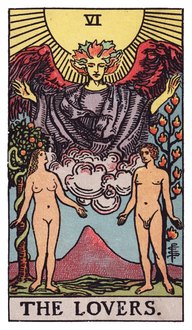 VIThe LoversYou become what you commit to
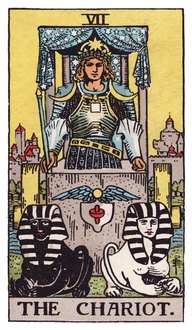 VIIThe ChariotOne direction, at last
Act twoVIII — XIV
The tools stop working
Strength answers the Chariot by refusing its method, and from there the sequence takes things away until almost nothing is being carried.
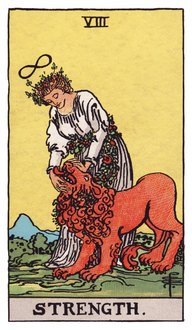 VIIIStrengthGentleness doing what force cannot
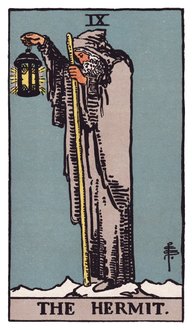 IXThe HermitThe lamp was always yours
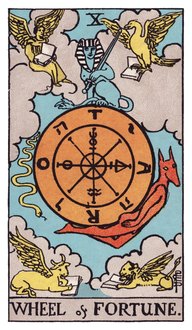 XWheel of FortuneFind where the turning can't reach
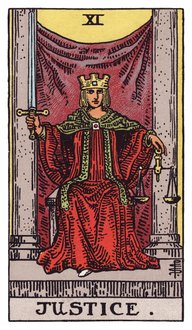 XIJusticeAn honest reckoning of what is
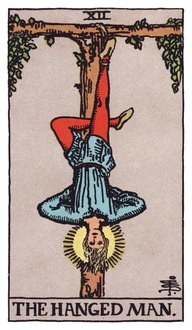 XIIThe Hanged ManUpside down on purpose
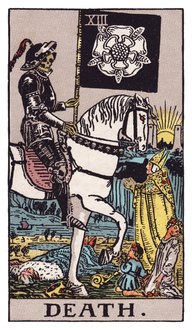 XIIIDeathWhat closes lets the next open
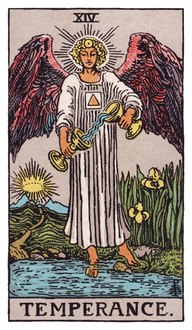 XIVTemperanceSlow work in the middle
Act threeXV — XXI
Collapse, and what it was for
The Devil, the Tower and the Star read as one long event caught at three moments. The rest of the run is spent on recovery.
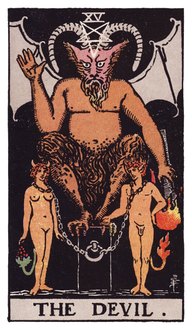 XVThe DevilChains loose enough to lift off
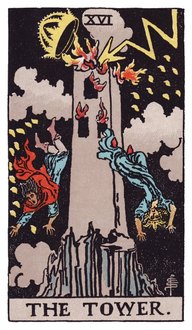 XVIThe TowerThe lie falling
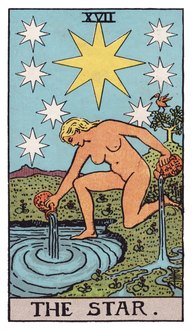 XVIIThe StarThe quiet return
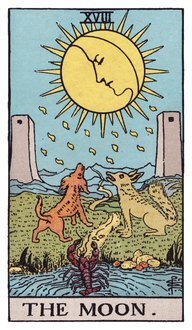 XVIIIThe MoonNo end in sight yet
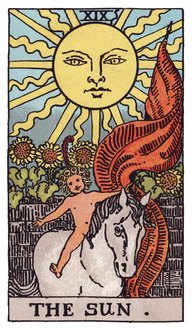 XIXThe SunGood, with nothing withheld
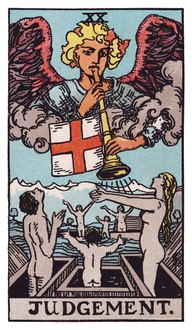 XXJudgementAnswering to your own name
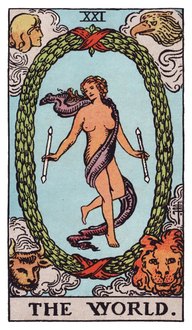 XXIThe WorldAll the way around, at last
The rest of the deck
The Minor Arcana is here too: all four suits now have their own pages, card by card.
- The Suit of Wands14 cards · fire · drive
- The Suit of Cups14 cards · water · feeling
- The Suit of Swords14 cards · air · thought
- The Suit of Pentacles14 cards · earth · matter

Chapter VI of Little Grimoire teaches the Major Arcana in depth; the Minor Arcana suits begin in Chapter II.
A reference page tells you what a card means. Little Grimoire teaches you to work it out from the sequence, the imagery and the position. Then, when you meet an unfamiliar card, you can reason it through instead of looking it up.
Free to start · No account needed to try a lesson